The Towns That Disappeared

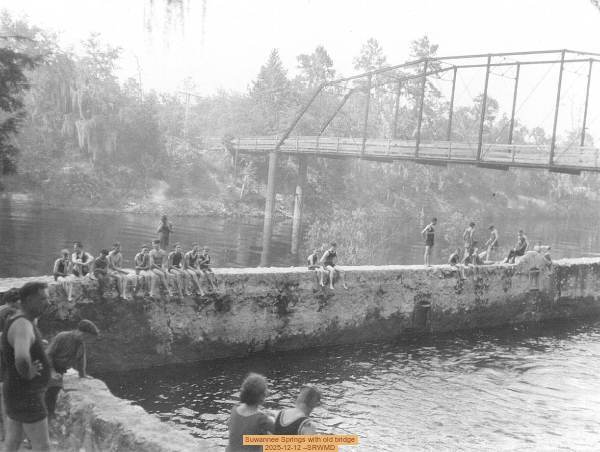
On opposite sides of the Suwannee River, two towns once faced each other. One sat on the east side of the Suwannee, near what is now Suwannee River State Park. The other grew across the river, near the meeting of the Suwannee and Withlacoochee. Columbus came first. Then Ellaville rose. For a time, both existed together. And eventually, both disappeared.

Today, if you drive through the area, you mostly see woods, river and old roads. It takes some imagination to understand that this quiet corner of North Florida once held two communities, each important in its own time.

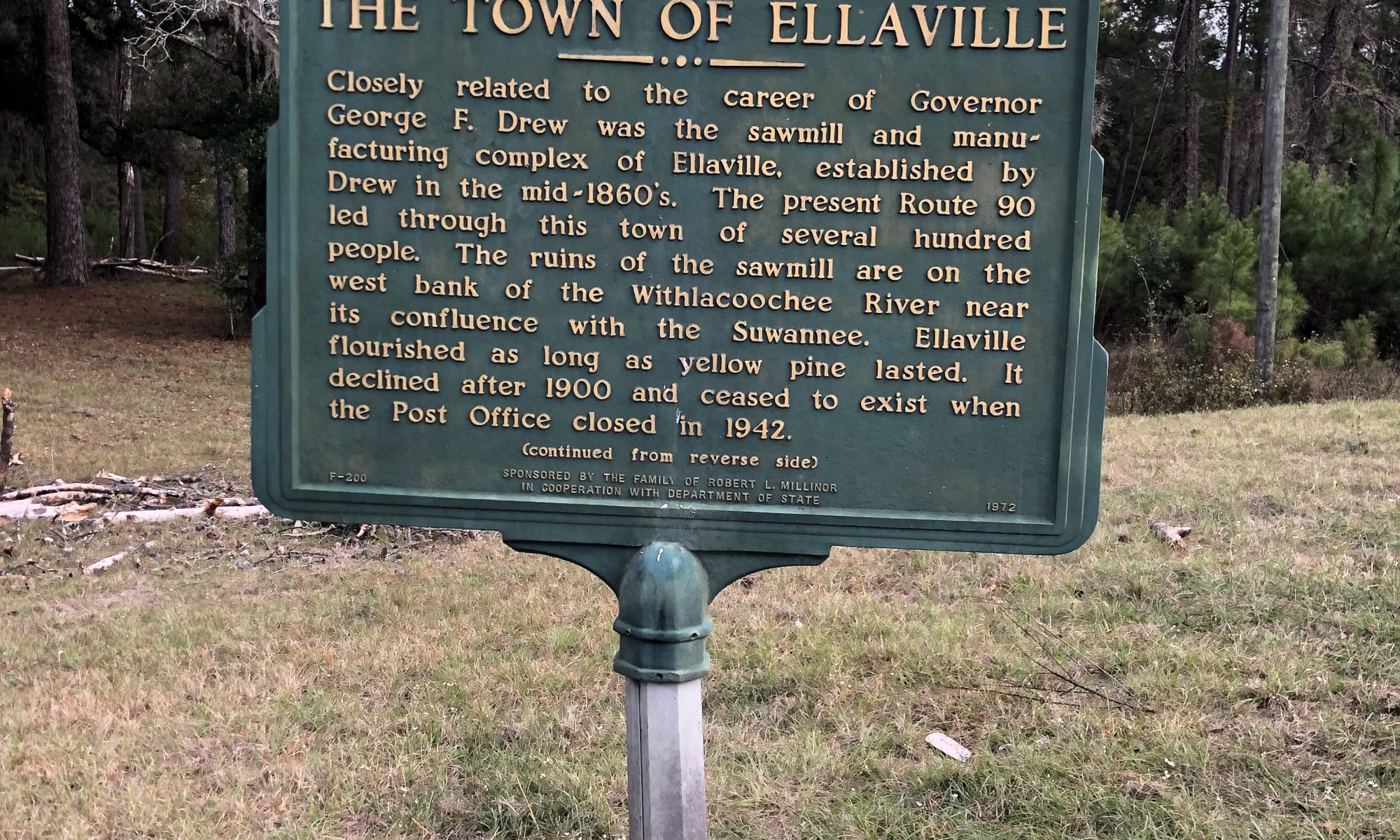
Years ago, when my son was still little, I took him out on the trails at Ellaville hoping we might find the ruins of George Drew’s mansion. We never made it that far. He had had enough walking, so we turned around. Now he is off at college, and I still remember how peaceful and beautiful those woods felt. A few years later, in 2019, I stopped and photographed the historical marker beside the road. In large letters, it says:

THE TOWN OF ELLAVILLE

Looking back at that picture now, what strikes me is how little of a town you can see behind it. There are trees, Spanish moss, grass and the familiar woods of North Florida. But Ellaville was not the first town here.

Before Ellaville, There Was Columbus

Columbus developed on the east side of the Suwannee in the early 1840s. Its location made sense because several different ways of moving through North Florida came together there. River traffic, ferries, stagecoach roads and mail routes all converged around the crossing, and later the railroad added another layer of importance.

Columbus became a place where cotton, goods, people and information moved through the region. Steamboats traveled the river. Stagecoaches connected the community with other settlements. A ferry carried people across the Suwannee.

By the Civil War, the railroad crossing was important enough that Confederate earthworks were built nearby to help defend it. For a while, Columbus seemed well positioned to last. Then a new town began growing across the river.

Ellaville Rises

After the Civil War, George Franklin Drew established a large sawmill and manufacturing operation on the opposite side of the Suwannee. North Florida was covered in yellow pine, and Drew built an economy around it. A town grew around the mill.

For several years, Columbus and the new settlement existed across the river from one another. One was an older transportation and river community. The other was a newer industrial town built around timber. Then the center of gravity began to shift.

In 1867, the Columbus post office was moved across the Suwannee to serve the growing sawmill complex, although it kept the Columbus name for a few more years. In 1872, the post office officially became Ellaville. By the early 1870s, Columbus had largely faded. Ellaville had taken its place.

George Drew built a substantial home there in 1868. Less than a decade later, he became governor of Florida. That detail helps me understand the scale of the place. Ellaville was not simply a small settlement beside a mill. For a time, it was one of the more important communities in this part of North Florida.

As Long as the Yellow Pine Lasted

Ellaville’s historical marker tells its story with an unusually simple sentence:

“Ellaville flourished as long as yellow pine lasted.”

There is almost an entire history of North Florida contained in those words. The forests that created Ellaville’s prosperity were also finite. As the surrounding timber was cut, the economic reason for the town began to disappear with it.

Ellaville declined after 1900. People left. Businesses closed. Houses vanished. The post office survived into the 1940s, but the town’s real boom had ended long before then. George Drew’s mansion remained standing after much of Ellaville had faded. Photographs from the twentieth century show the once-impressive house slowly deteriorating before it disappeared around 1970. The woods kept moving back in. Just as they had around Columbus before it.

What Stayed

Not everything disappeared. At Columbus, traces remain inside Suwannee River State Park: the cemetery, earthworks, old roads and places where people once approached the river. At Ellaville, the landscape is full of its own clues.

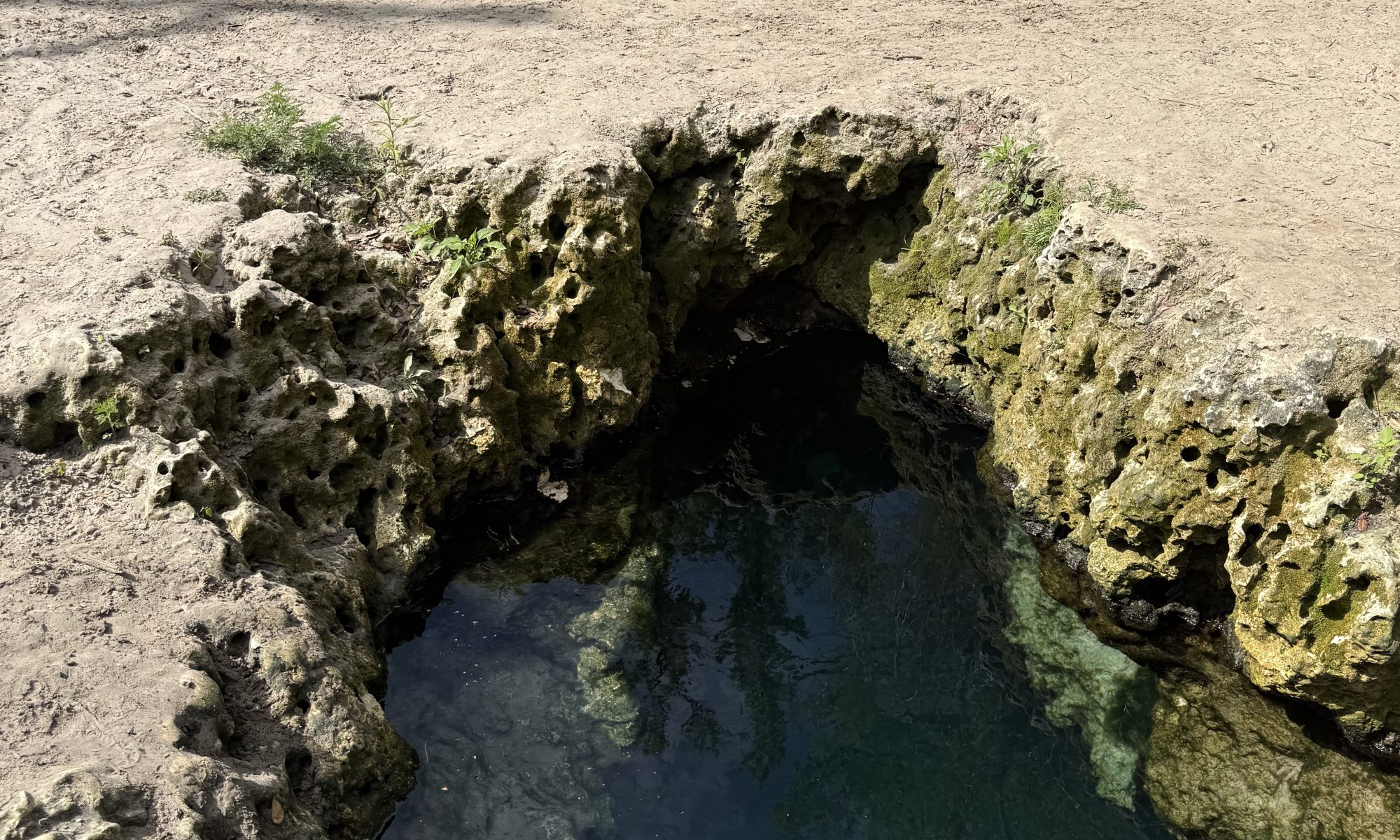
One of them is Suwanacoochee Spring. I remember paddling the Suwannee one day and passing the spring where its water enters the Withlacoochee. I was moving parallel to the shoreline when the outflow hit the side of my kayak hard enough that it nearly tipped me over.

That was my introduction to Suwanacoochee before I understood much about its connection to Ellaville. The walls around the spring are still there. The town is gone. The spring is not. Nearby, scattered ruins, old pathways and the landscape itself tell the same story in different ways. Once you know what was here, the empty spaces stop feeling quite so empty.

Two Towns, One River

What I find most interesting is how quickly the whole sequence happened. Columbus rose first, built around movement: ferries, stagecoaches, river commerce and later the railroad. Then Ellaville rose across the river, built around timber, manufacturing and transportation.

For a while, both towns existed at the same time. Then Columbus faded. A few decades later, Ellaville began fading too. Two towns rose along the same stretch of river, one after the other, and neither lasted very long.

The river stayed through all of it. The Suwannee and Withlacoochee kept flowing while one community rose, another replaced it, and eventually both disappeared back into the landscape.

That is one of the things I have come to love about exploring North Florida. Sometimes the most ordinary-looking woods are not ordinary at all. Sometimes they are the remains of one town. Sometimes two.

Experience It

This is a good place to explore as a pair. Start at Suwannee River State Park and look for the traces of Columbus: the cemetery, old roads and earthworks. As you walk, think about the stagecoaches, ferries and river traffic that once made this a crossroads.

Then walk across the old U.S. 90 bridge over the Suwannee into Ellaville. The bridge itself came much later than either town, but crossing the river on foot gives you a physical sense of just how close these two communities were.

On the Ellaville side, stop at the historical marker and walk the trails toward the Drew Mansion ruins. Find Suwanacoochee Spring near the meeting of the Suwannee and Withlacoochee and notice the walls still surrounding part of the water.

Neither place gives up its story immediately. That is part of what makes them worth visiting. You have to slow down, look carefully and imagine what is no longer there. Two towns once occupied this stretch of river. Now the river is what remains.

— Dion, Anasa founder
I Knew Sheck Exley Before I Knew Who He Was

For years, Sheck Exley existed in my memory as one of my high school math teachers. He was eccentric, interesting, and hard to forget. He had sayings he seemed to keep ready for almost any situation, including one I still remember clearly: “It’s my way or the highway.”

I knew he was involved in karate. I knew he had a personality that could fill a classroom. What I did not know was that he was also one of the most accomplished cave divers in the world. At the time, I had no idea.

The Blackboard

I remember one day in his class when he had students come to the blackboard to work algebra problems. When my turn came, I was feeling pretty confident. The equation looked easy, so I walked quickly to the board, worked it out, and was already prepared to enjoy being right. Except I wasn’t.

I had made some stupid little mistake. Sheck responded with one of those funny sayings he always seemed to have ready. I wish I could remember exactly what he said. Whatever it was, I remember slumping back into my seat, slightly embarrassed and already biding my time until I could get another chance to demonstrate my brilliance.

Looking back, what strikes me is that he could have skewered me. I had walked to that board with enough teenage arrogance to make myself an inviting target. He could have made the mistake hurt a lot more than it did. Instead, he showed me some grace and let me sit down. That is the Sheck Exley I knew then.

Meeting Him Again

Some years after high school, I was at the house of a friend of a friend when I noticed one of Sheck’s books sitting on the coffee table. I picked it up and starting looking through the book. And pretty much stopped participating in whatever everyone else was doing.

I sat there reading about cave exploration and underwater passages hidden beneath the North Florida landscape I had grown up around. The more I read, the stranger the experience became. This was Sheck Exley, my math teacher. Except it felt like I was reading about someone I had never met.

The person in those pages seemed almost entirely new to me. I had sat in his classroom. I knew his sayings. I knew about the karate club. I had even had my own small encounter with his sense of humor at the blackboard. But I had no idea how much of his life existed somewhere else entirely.

A Modern-Day Explorer in Our Own Backyard

What makes that realization even stranger is how often his story now intersects with places that were already part of my own life.

Telford Spring was one of those places. I spent countless childhood afternoons there, swimming through the limestone opening beneath the natural bridge and never imagining how far the cave system extended beyond what I could see. Years later, I learned that Sheck was one of the divers involved in exploring and surveying those passages.

Peacock Springs is another. My dad took my sister and me there long before it became a state park, back when the dirt road through the woods was part of the adventure. Today, Peacock is known around the world for its cave system, and there is a plaque there honoring Sheck.

Then there is Falmouth, another spring with an enormous hidden world beneath what looks like a small patch of water at the surface.

The more I learn about these places, the more often his name appears.

We tend to imagine explorers as people from another century, crossing oceans, climbing mountains, or disappearing into blank spaces on old maps. But Sheck was a modern-day explorer working right here in our own backyard, pushing into underwater passages beneath North Florida that most people would never see.

It is an odd feeling to keep encountering someone years after they are gone.

Someone I Had Never Met

Sheck died in 1994 while attempting an extraordinarily deep dive in Mexico. By the time I really understood the scale of what he had accomplished, he was already gone.

That is probably why the coffee-table book memory has stayed with me. I was not discovering a famous cave diver who happened to share a name with one of my old teachers. I was discovering that one of my old teachers had been this person all along.

There is something humbling about realizing how little we may know about the people sitting right in front of us. I knew Sheck Exley. And in another sense, I did not know him at all.

Experience It

If you visit Wes Skiles Peacock Springs State Park, look for the plaque honoring Sheck Exley. Then walk the interpretive trail that follows the cave system beneath the woods. From the surface, the landscape looks quiet and ordinary: pines, oaks, sandy trails, and patches of water tucked into the forest. But beneath your feet is another world.

That was the world Sheck spent so much of his life exploring. And if you want to understand him beyond the plaque, find one of his books and read it.

That is how I first discovered the other Sheck Exley. Years after sitting in his classroom, I picked up one of his books from a coffee table and found myself completely absorbed in the story of a modern-day explorer I had somehow already met.

For me, Peacock connects those two versions of the same person: the eccentric math teacher I remember from a classroom and the explorer whose name I now keep finding beneath the places I grew up around.

Sometimes we discover hidden stories in landscapes. Sometimes we discover them in people. And sometimes it takes years to realize just how much was there all along.

— Dion, Anasa founder

The Spring That Feels Like Home

My dad took my sister and me to Telford Spring so often when we were kids that it almost felt like our backyard pool. I can still picture the old oak tree overlooking the spring, with my boombox propped against it playing cassette tapes filled with whatever 80s music I was into at the time.

My dad was not especially cautious about the water. I remember him teaching one of my cousins how to swim by throwing him into the cold spring and letting necessity handle the lesson. My cousin figured it out pretty quickly.

We always stayed there for hours. Long enough that the cold water would eventually get to us, and we would swim out into the Suwannee for a while just to warm up before getting back in the spring.

One of my favorite things to do was turn the spring into a challenge. I would dive in, swim through the cave beneath the limestone bridge, then keep going down the spring run toward the river, all underwater, just to see how far I could make it on one breath. At the time, I had no idea how much more water and limestone existed beyond what I could see.

For most of my childhood, Telford was simply a place we went. We swam, listened to music, and spent enough time there that it stopped feeling like somewhere we visited and started feeling like somewhere that belonged to us.

For all those years, though, I never really wondered who Telford was.

The Name Behind the Spring

The man behind the name was Reverend William Brazelton Telford, a Presbyterian minister who came to this part of North Florida around 1864, during the final years of the Civil War, and became associated with the Luraville area.

We know the spring came to bear his name. What is harder to recover is exactly why. Some accounts suggest he may have owned or homesteaded land in the area, but I have not found enough to say with confidence that the spring itself was part of his property. I have also found later memories of baptisms taking place at Telford, but nothing that proves Rev. Telford himself performed them there.

That uncertainty is part of what interests me. Perhaps the connection once seemed so obvious to the people living here that nobody thought it needed to be written down. More than 150 years later, the name has survived more clearly than the story behind it.

Sometimes history does not remain as a building or monument. Sometimes it survives because people keep saying a name.

The World Beneath Telford

As a kid, the little cave beneath the limestone bridge felt like the hidden part of Telford. It turns out I barely knew the beginning of it.

Beneath the spring is an underwater cave system extending far beyond the small passage we swam through. Cave divers spent years exploring and surveying those passages, eventually connecting Telford with other parts of the underground system beneath the surrounding landscape.

One of the people involved in that early exploration was Sheck Exley. That name means something different to me than it does to most people who know the history of cave diving. Sheck was one of my high school math teachers.

At the time, I knew him as an eccentric and interesting teacher who liked to say, “It’s my way or the highway.” I knew he was involved in karate. I did not understand the other life he was living beneath the waters of North Florida.

I would not learn until much later that he had helped explore places like Telford. By then, he had already been my teacher and had tragically passed away. I had known the teacher. I had known the spring. I simply had no idea, at the time, how closely those two parts of my world were connected. That is another story.

A Place Can Hold More Than One Life

The older I get, the more I realize that familiar places can hold stories we never knew were there. Telford was part of Rev. Telford’s North Florida. Later, it became part of Sheck Exley’s underwater world. And for me, it was part of childhood. The history does not replace any of those memories. It adds layers to them.

I can learn about the preacher whose name survived. I can look at maps of cave passages that extended far beyond anything I imagined as a kid. I can understand now that one of my teachers had explored beneath a place where I spent countless summer afternoons.

But when I picture Telford, that is still not what I see first. I see the oak tree. I hear cassette tapes playing from a boombox. I see my sister nearby and my dad at the spring.

Experience It

On one side of the limestone bridge is a small opening where I used to jump in the water. From there, you can swim through the short cave beneath the rock and emerge into the main spring. The water turns cold around you almost immediately.

Then look down the spring run toward the Suwannee, where the clear spring water meets the darker river. If you stay in the spring long enough, you may even understand why we sometimes climbed into the river just to warm up.

Before you leave, follow the trail back to the parking lot, walk to the left, and down into the nearby sinkhole. It connects into the larger Telford cave system, a reminder that what you see at the surface is only a small part of what is beneath you.

Then come back to the spring and sit beneath the oaks for a while. It is not a large place. It is not polished. It does not need to be.

Places become important for all kinds of reasons. Sometimes because of the history attached to them. Sometimes because of the people who explored them. And sometimes because someone you loved took you there again and again.

The water is still cold. The limestone is still there. And for me, so is my dad.

— Dion, Anasa founder

The Name in the Woods

My dad started taking me to Peacock Springs long before it became a state park. Back then, at least in my memory, it felt like little more than a dirt road disappearing into the woods.

That road was part of the adventure. It rolled up and down enough that my sister and I treated it like a roller coaster, sitting on the back of my dad’s MGB while he drove faster over the hills than I would probably recommend today.

At the end of the road was Peacock Springs. I knew the name long before I ever wondered where it came from.

Today, Wes Skiles Peacock Springs State Park still feels surprisingly wild. It is not polished in the way some Florida state parks are. The roads are simple, the woods grow close, and the springs seem tucked into the landscape rather than built around.

There is something almost primordial about it.

And yet, on almost any visit, you are reminded that this quiet patch of North Florida is known far beyond North Florida. Cars in the parking area carry license plates from around the country. Sometimes you hear accents from other parts of the world.

They have come because beneath these woods lies one of the most extensive underwater cave systems in the country. But long before Peacock became a name known among cave divers, it was the name of a family.

Before the Divers Came

Dr. John Calvin Peacock came to this part of Florida from North Carolina in the years before the Civil War and settled near the springs that would eventually carry his family name.

The Peacock family built a life here. They farmed a large tract of land, raising cattle and growing crops, while Dr. Peacock practiced medicine throughout the surrounding countryside.

It is easy today to picture a doctor working from an office or hospital. In rural North Florida in the nineteenth century, the job looked very different. A country doctor might travel for miles by horse or buggy to reach someone who needed him.

The roads would have been rough. The communities were scattered. Much of the landscape between them was still forest.

Somewhere in those woods, the Peacocks built their home and raised their family. And eventually, they buried members of that family there.

The Cemetery

Not far from the springs is the Peacock family cemetery.

For many years, it became overgrown enough that it nearly disappeared back into the woods. Later, the cemetery was restored and marked, preserving one of the clearest physical connections between the family and the landscape that now carries their name. I like that the cemetery is still there.

The springs have become famous for something the Peacock family could never have imagined. Divers now travel thousands of miles to explore passages deep beneath their former land. Maps show miles of underwater cave extending beneath a landscape that, from above, still looks mostly like woods. But the family remains there too.

Their name appears on park signs, maps, cave surveys and dive logs.

Most people who say “Peacock Springs” probably never stop to wonder who Peacock was. For most of my life, I didn’t either.

A Name Can Outlive a Place

That has become one of the things I notice more often as I learn the stories of North Florida. Names survive. A ferry disappears, but Charles Spring remains. A preacher passes through a community, and generations later his name may still be attached to a spring.

A family settles beside a patch of woods in the nineteenth century, and people from around the world eventually travel there carrying dive tanks beneath a sign bearing their name.

The places change. The reasons people come to them change.

But sometimes the name stays.

I wonder what Dr. Peacock would think if he could stand near the spring today and watch divers preparing to disappear beneath the water.

He probably would not recognize much of what they were doing. But he would recognize the woods. And he would certainly recognize the name.

Experience It

One of the best ways to experience Peacock Springs is to walk the interpretive trail that follows the cave system beneath the ground.

From the surface, it looks like a walk through ordinary North Florida woods. But beneath your feet are miles of flooded passages twisting through the limestone. The trail helps connect the landscape you can see with the one you cannot. That changes the way you walk through the place.

The woods stop feeling like empty space between the springs. You begin to understand that there is another landscape directly below you, hidden beneath the roots and soil.

While you are there, look for the plaque honoring Sheck Exley, one of the pioneers of modern cave diving.

That plaque has a different meaning for me because Sheck was once one of my high school math teachers. At the time, I knew him as an eccentric and interesting teacher who liked to say, “It’s my way or the highway.” I knew he was involved in karate. I did not fully understand that he was also helping explore and map the underwater world beneath places like this.

That is a story for another Field Note. For now, walk the trail slowly.

Think about the Peacock family who lived here before the park existed. Think about the divers who later came to understand what was hidden below. Then look around at the same woods that have been here through all of it.

The Peacock family gave this place its name. Generations later, people like Sheck Exley helped us understand what was hiding beneath it.

And once you know both stories are there, the woods feel a little different.

— Dion, Anasa founder

When the Stars Come Out

If you live in or near a city, you can go a long time without really seeing the night sky.

There are always lights somewhere. Streetlights line the roads, houses glow through the trees, parking lots stay illuminated long after dark, and the city itself throws enough light into the sky that many of the stars simply disappear from view.

Drive far enough into rural North Florida, though, and the night begins to look different.

Once the last light fades behind the trees and you get away from the glow of town, your eyes slowly begin to adjust. At first, you notice a few stars. Then a few more. Give it enough time, and the sky seems to keep filling in.

That experience always reminds me that darkness has become something many of us have to intentionally seek out.

For most of human history, a clear night meant looking up at thousands of stars. People used them to navigate, mark the seasons, tell stories, and make sense of the world around them. Today, many of us live beneath skies brightened by artificial light, and we rarely stop to think about how much has disappeared above us.

Of course, nothing has actually disappeared. We have simply made it harder to see.

A Different North Florida After Dark

We spend a lot of time talking about North Florida’s water, and for good reason. The springs and rivers are some of the most remarkable parts of this landscape.

But there is another side of North Florida that does not reveal itself until after sunset.

Once you get away from the larger towns and highways, there are still places where darkness feels like darkness. On a clear night, the number of stars can be startling if you are accustomed to a city sky. Under the right conditions, you may even be able to make out the hazy band of the Milky Way stretching overhead.

The experience is not only visual. The woods sound different after dark. Frogs and insects replace the daytime birds, an owl may call somewhere beyond the trees, and the breeze seems easier to notice when everything else settles down.

A place that felt familiar an hour earlier can feel completely different once the sun disappears.

There is something about sitting outside in that darkness that makes it easier to slow down. You can talk, listen to the fire, watch the sky, or simply sit quietly for a while without feeling like you need to move on to the next thing.

Sometimes that is enough.

Experience It

You do not need much to experience a dark North Florida sky. In fact, the less you bring with you, the better.

Find somewhere away from city lights on a clear night and give your eyes time to adjust. Put your phone away for a while, or at least turn the screen down. If you need a flashlight, use it sparingly. After twenty or thirty minutes in the darkness, you will begin noticing stars that were invisible when you first stepped outside.

You do not necessarily need to know what you are looking at, either. There are apps that can identify planets and constellations, and they can be useful, but sometimes I think we are too quick to turn every experience into something we need to understand or accomplish.

Sometimes it is enough simply to look up.

If you are near the Suwannee, spend some time beside the river after dark. If you are camping, let the fire burn down and see what begins to appear above you. If you are somewhere quiet enough to hear frogs, insects, and wind instead of traffic, stay outside a little longer than you normally would.

North Florida gives us plenty of reasons to explore during the day, but some of its best moments happen after we normally would have gone inside.

The stars have been there all along. Sometimes we just need to get somewhere dark enough to see them.

— Dion, Anasa founder

Baptizing Spring

I had driven past Baptizing Spring more times than I could count before I ever saw it.

It sits in an undeveloped part of Peacock Springs State Park, across the road from Peacock Springs and Orange Grove Sink. Those places are destinations, drawing people to swim, dive, and explore some of North Florida’s remarkable waters.

Baptizing Spring is different. The spring itself is small, especially by North Florida standards, and isn’t really suited for swimming. Even if it were easier to reach, it probably would never become the kind of spring people plan a day around.

What makes Baptizing Spring remarkable isn’t really the spring at all. It’s the stories hidden around, and beneath, it.

I first visited about five years ago after asking park management for permission to go back there. I knew the name, but I knew almost nothing about its history. I certainly didn’t realize that hidden in those woods was the site of a seventeenth-century Spanish mission and a Native community whose story began more than two hundred years before the Charles family established their ferry on the Suwannee.

In the early 1600s, Spanish Franciscan missionaries established San Juan de Guacara here among the Native people already living in this part of Florida. Archaeological excavations at Baptizing Spring have uncovered evidence of structures, hearths, storage areas, and other features of everyday life. This wasn’t simply a place where missionaries occasionally stopped. It was a community.

That discovery changed the way I thought about the history of this area. It’s easy to imagine North Florida’s story beginning with settlers, ferries, railroads, and the small towns we know today. In reality, people had been living, traveling, trading, and building communities across this landscape for centuries before Florida became an American territory.

San Juan de Guacara was part of the Spanish mission system that stretched across northern Florida. The missions brought Christianity, but they were also part of Spain’s colonial system, placing growing demands on the Native communities around them. Those tensions eventually contributed to the Timucua rebellion against Spanish authority in 1656, after which the mission at Baptizing Spring was abandoned and relocated west toward an important crossing of the Suwannee River.

That caught my attention because it takes us back to the subject of our last Field Note: Charles Spring.

More than 150 years before Reuben and Rebecca Charles established their ferry there, people had already recognized the importance of that same area as a crossing of the Suwannee. Long before Bellamy Road reached the river, this landscape was already connecting people.

There may even be a connection between San Juan de Guacara and the name Suwannee itself. The origin of the word isn’t settled, but one theory traces it to the Spanish San Juan. Historical maps show the river under that name and later variations before spellings resembling Suwannee began to appear. We may never know the answer with certainty, but the possibility adds another fascinating layer to the story of this otherwise unassuming place.

Baptizing Spring has another surprising connection, although this one is underground.

In 2010, cave divers connected Baptizing Spring to the extensive Peacock Springs cave system across the road. From the surface, the two places seem separate. Peacock is one of Florida’s best-known cave-diving destinations, while Baptizing Spring is a small spring hidden in undeveloped woods. Beneath the ground, however, they’re part of the same system.

I love that contrast because it captures Baptizing Spring perfectly. Almost everything interesting about this little spring is something you cannot see at first glance. Its water connects underground to Peacock Springs, its woods conceal the remains of a community that existed four centuries ago, and its history reaches west toward the Suwannee.

The spring may be small, but its connections are anything but.

Experience It

Baptizing Spring itself will probably never be a North Florida destination, and perhaps that’s fitting. It also isn’t a place I would encourage anyone to simply wander into. The spring lies in an undeveloped part of the state park, and when I visited, I first asked park management for permission. More importantly, it is an archaeological site worth protecting.

Fortunately, you don’t have to visit Baptizing Spring itself to experience the landscape that makes its story meaningful.

Visit Peacock Springs and Orange Grove Sink across the road. Walk beneath the oaks and pines, look at the limestone beneath your feet, and spend some time around the water. While you’re there, remember that the cave passages beneath you extend beyond the places you can see and connect to that little spring hidden in the woods nearby.

Then consider another connection you can’t see. More than four centuries ago, people were living and building a community in those same woods.

When I finally visited Baptizing Spring about five years ago, I thought I was simply seeing an obscure spring I had driven past for years. I know now that its obscurity is part of what makes it so interesting.

Some places are worth knowing about even if you never visit them. Baptizing Spring is one of those places.

– Dion, Anasa Founder

Charles Ferry

Some of my earliest memories of Charles Spring have nothing to do with history. 

When I was growing up, my dad used to take me there to fish for catfish. We’d climb out onto a large, flat limestone rock overlooking the Suwannee River, bait our hooks, and settle in for the afternoon. It was always quiet, and most days we had the place to ourselves.

To me, it was simply a good place to fish with my dad.

I never wondered why it was called Charles Spring. I didn’t know there had once been a Charles Ferry, or that the small cemetery tucked beneath the oaks belonged to the family whose name still lives on across this landscape. I certainly didn’t realize that this quiet bend in the river had once helped connect a young Florida.

When the United States acquired Florida in 1821, the new territorial government faced a practical challenge. St. Augustine remained the territory’s oldest and most established city, while Tallahassee had been chosen as the new capital because it sat roughly between the former capitals of East and West Florida. Connecting those communities became essential, so Congress authorized the construction of the Bellamy Road, the first federally funded road in Florida.

The road crossed the Suwannee River at Charles Ferry. That made this quiet stretch of river one of the most important gateways in the new territory.

Without a bridge, every traveler heading between St. Augustine and Tallahassee eventually reached the same obstacle. The road simply ended at the water, and if they wanted to continue their journey, they depended on the Charles family.

Recognizing both the need and the opportunity, Reuben and Rebecca Charles established a ferry, trading post, and inn here in 1824. For more than fifty years, they welcomed travelers arriving from both directions, helping them cross the Suwannee and continue on their way.

Imagine arriving after several days on horseback or by wagon. Your supplies are running low, your horse is tired, and the Suwannee stretches across your path with no bridge in sight. While you wait for the ferry, you refill your water at the spring, purchase provisions from the trading post, and exchange stories with other travelers who have reached the same crossing from the opposite direction. For a little while, everyone’s journey pauses here, not because they have reached where they intended to stop, but because they have reached the river. The ferry carried people across the Suwannee.

The Charles family helped keep Florida moving.

One story about the Charles family has always stayed with me. According to local tradition, Reuben and Rebecca maintained friendly relationships with the Native Americans who lived in this area during one of Florida’s most turbulent periods. It’s said they wore red scarves so they would be recognized and left unharmed.

Whether every detail can be proven or not, I appreciate that the story has survived. History isn’t preserved only in official records. Sometimes it’s preserved because a community continues telling it.

As Florida grew, new roads, railroads, and bridges gradually replaced many of the old crossings that had once been so important. Bellamy Road faded into history, and unlike Suwannee Springs, no bridge was ever built to replace Charles Ferry. The bustle disappeared, the river grew quiet again, and the buildings eventually vanished.

But the name remained. It lives on today in Charles Spring, Charles Ferry, and the Charles family cemetery, quietly reminding visitors that the people who once helped connect a young Florida have never completely disappeared.

Experience It

Charles Spring isn’t a place to rush through.

Park in the spring parking lot and walk out to the Bellamy Road historical marker and follow the old road toward the river. As you walk beneath the live oaks, imagine wagons making the same approach almost two centuries ago, knowing their journey could not continue until they found a way across the Suwannee.

Then continue to the river, where public boat ramps now serve both banks. The ferry is gone, but people still begin journeys from this very crossing. Fishermen launch before sunrise, families paddle the river, and kayakers drift past the same shoreline where travelers once waited for their turn to cross.

Spend a few minutes at Charles Spring, where fresh water made this a natural stopping place long before automobiles existed. 

Before you leave, take the short walk to the Charles family cemetery. Read the names. Read the dates. Then take one last look toward the river. The crossing is still here. The spring is still here. The family name is still here.

The next time I visit Charles Spring, I’ll probably walk back out onto that same limestone rock where my dad and I used to fish. The river hasn’t changed much since those afternoons, but I have. Now, when I look across the water, I won’t just see one of my favorite childhood fishing spots.

I’ll see one of the crossings that helped shape a young Florida, and I’ll remember the family that helped keep it moving.

— Dion

Crossing the Suwannee

Every time I cross the Suwannee River, I do the same thing.

It usually starts with the highway signs. If you’ve driven across the Suwannee in Florida, you’ve probably noticed them, the signs with musical notes, a nod to the song that made this river famous.

And almost without fail, I start singing: Way down upon the Suwannee River… I’ve done it for years.

But more recently I found myself wondering something I’d somehow never really thought about: How did people get across before there were bridges?

It occurred to me that I’d crossed the Suwannee hundreds of times. I knew the song. I knew the river. I’d even jumped off one of its bridges.

But I’d never really thought about the crossing itself. 

Once you look at a map, the importance of the Suwannee becomes obvious. The river begins in Georgia and winds south through North Florida before emptying into the Gulf. Travel west across this part of Florida and, sooner or later, you have to cross it. To truly go around it, you’d have to head north into Georgia before coming back down into Florida.

Today, crossing hardly qualifies as an obstacle. We drive across a bridge in less than a minute. But for much of Florida’s history, it was a very different problem. Travelers had to find a crossing. And at Suwannee Springs, you can still see how four generations of Floridians solved it.

The earliest crossing at Suwannee Springs was a ferry. Before bridges connected the two banks, travelers arriving here had to stop and wait to be carried across. Eventually, the ferry was replaced by a bridge. That bridge was replaced by another. And that one eventually gave way to the modern crossing we use today.

Four generations of crossings, all within the same small stretch of river. Pieces of that history are still there. Near the spring, old rusted piers stand by the river, the remains of the first bridge that once carried travelers from one bank to the other.

Just downstream stands its successor, an old steel truss bridge that no longer carries traffic. Most locals know it simply as the Graffiti Bridge. And I knew that bridge long before I knew its history. When I was a teenager, the Graffiti Bridge was a popular swimming spot. And yes, we jumped off it into the Suwannee. More than once.

I’m certainly not recommending anyone repeat that particular part of the experience today. But whenever someone asks that old parental question, “If your friends jumped off a bridge, would you?” I suppose I have to answer honestly. Yes!

At the time, I wasn’t thinking about the bridge as history. It was simply part of growing up around the Suwannee. I didn’t know that another bridge had stood before it. I certainly wasn’t thinking about the ferry that came before either of them. It was just the river.

And maybe that’s what I find most interesting about these places. Sometimes we can know somewhere our entire lives without really knowing its story.

Think about how differently people have experienced this one spot.

There was a time when a traveler arrived at the Suwannee and had to stop. Was the ferry running? Was the river too high? How long would the crossing take?

Eventually, travelers crossed on a bridge. Years later, teenagers like me jumped from another one into the water below.

Today, most of us pass over the same river on a modern highway without giving the crossing much thought at all. The river is still there. The problem hasn’t changed. Every generation has simply found a different way across.

Experience It

The next time you’re near Suwannee Springs, don’t just cross the river. Stop for a while. Walk down to the spring and look out across the Suwannee. Imagine arriving here before there was a bridge and realizing that your journey couldn’t continue until someone carried you to the other side.

Look for the old bridge piers by the river. Then walk over to the Graffiti Bridge and stand on a crossing that itself became obsolete when the next generation built another one nearby. But please don’t follow my teenage example and jump off it!

Instead, take a few minutes to notice something that’s easy to miss: In one small stretch of the Suwannee, you can see the story of how North Florida learned to cross a river. And when you get back in the car and drive across the newest bridge, maybe do what I do. Sing a few words.

Way down upon the Suwannee River…

Only now, look down. And think about all the people who had to figure out how to get to the other side.

— Dion

Maybe she was paying attention all along

A few days ago, I was walking into a doctor’s appointment when my phone buzzed.

It was my daughter, Kendall. She’s in her first semester at FSU (Go Noles!) and she wanted to share something she workshopped in class.

I’ll admit it, I found myself wiping away tears in the hallway. Not because it was my daughter who wrote it, although I’m certainly a proud dad. But because every now and then someone puts words to something you’ve carried in your heart for a long time, and that’s exactly what she did.

As parents, we spend years hoping we’ve passed along something worthwhile. Kindness. Curiosity. A love of people and places. The ability to notice things others walk past.

Reading her poem, I realized something.

Maybe she was paying attention all along.

She gave me permission to share it, and I’m grateful she did. I hope it resonates with you the way it did with me.

Springs on the Suwannee

by Kendall Sweat

Somewhere

I sit among the bald cypresses and swamp gums

with my feet dipped in the cold, clear water,

anchoring me to the moment,

allowing me to stretch my own roots into the soil.

The water bugs dance past me

gliding like figure skaters across the surface,

whispering to me stay afloat

and trust the unseen.

The sun places a blanket over my soul,

encouraging me to curl up

among the bald cypresses and swamp gums

and let my body rest.

I melt into the land that I lie on:

my limbs become the trees,

my blood transforms to water,

my soul joins the dancing water bugs.

I am distant from civilization,

distant from the screaming cars

and the imposing skyscrapers;

the gray, dead concrete.

Somewhere

I sit among the bald cypresses and swamp gums

and their roots reach out to mine,

announcing where I belong.

The Rivers That Disappear

A few weeks ago, I wrote about the Cody Scarp. Millions of years ago, it was Florida’s coastline. Today, in many places, it’s little more than a subtle change in elevation. If you didn’t know it was there, you could drive across it without ever noticing.

But the more I learn about North Florida, the more I realize just how many of the things I love about this place trace back to that ancient shoreline. The springs. The sinkholes. The caves. Even the rivers.

Most rivers have somewhere to go. They flow into another river. A lake. Eventually, the sea.

But in North Florida, rivers begin doing something unusual when they reach the Cody Scarp. Some disappear.

The Santa Fe River flows normally until it reaches a place called River Sink. There, an entire river vanishes underground. Several miles later, it returns at River Rise and continues on toward the Suwannee.

Farther north, the Alapaha River reaches Dead River Sink. During periods of low water, so much water disappears into the limestone that long stretches of the riverbed can become dry.

The Aucilla River may be stranger still. It disappears underground and returns again and again, as if the river can’t decide whether it belongs above the ground or below it.

But not every river disappears. The Withlacoochee crosses the Cody Scarp too. Instead of vanishing, it becomes a river transformed by springs. Madison Blue Spring pours millions of gallons of groundwater into the river each day, and farther downstream, even more springs join it.

That’s what fascinates me. The Cody Scarp doesn’t make every river behave the same way. It simply changes the rules. Some rivers lose water. Some gain water. Some disappear. Some emerge. All because the limestone beneath them becomes exposed enough for water to move in ways it can’t farther north.

The river that has captured my attention is Little River, which is honestly more creek than river. It’s close to where I grew up. Little River flows quietly through North Florida until it reaches a landscape of sinkholes where the water disappears into the limestone.

What happens after that isn’t entirely understood. Researchers believe some of the water may return at Little River Spring, about ten miles away. Other research shows that water entering the Little River and nearby Stick Sink system contributes to the groundwater feeding Troy Spring, on the opposite side of the Suwannee River.

Think about that for a moment. A river disappears into the ground. Its water travels through limestone beneath forests, farms, roads, and even beneath the Suwannee River itself before returning to the surface.

Years ago, when looking for a home to build Anasa,  I nearly bought land just south of Little River Sink. The property had two sinkholes (or karst windows) where you could look directly into the underground water below.

What caught my attention was where they were. On a map, they appeared almost perfectly aligned between Little River Sink and Little River Spring. I have no idea whether they were actually connected. Maybe it was coincidence. Maybe it wasn’t. But standing beside those openings, it was impossible not to wonder what was happening beneath my feet.

That’s one of the things I love most about North Florida. The landscape doesn’t tell all of its stories on the surface. Sometimes they’re hidden beneath the limestone. Sometimes they’re carried underground by rivers that disappear. Sometimes they’re revealed again where a spring quietly returns them to daylight. You just have to pay attention.

Because the North Florida we see is only half the story. Beneath it is another landscape entirely. One where rivers don’t always follow the blue lines we draw on maps.

— Dion

P.S. Have you ever visited River Sink, Dead River Sink, Madison Blue, Little River, or Troy Spring? I’d love to hear which North Florida places have surprised you the most.