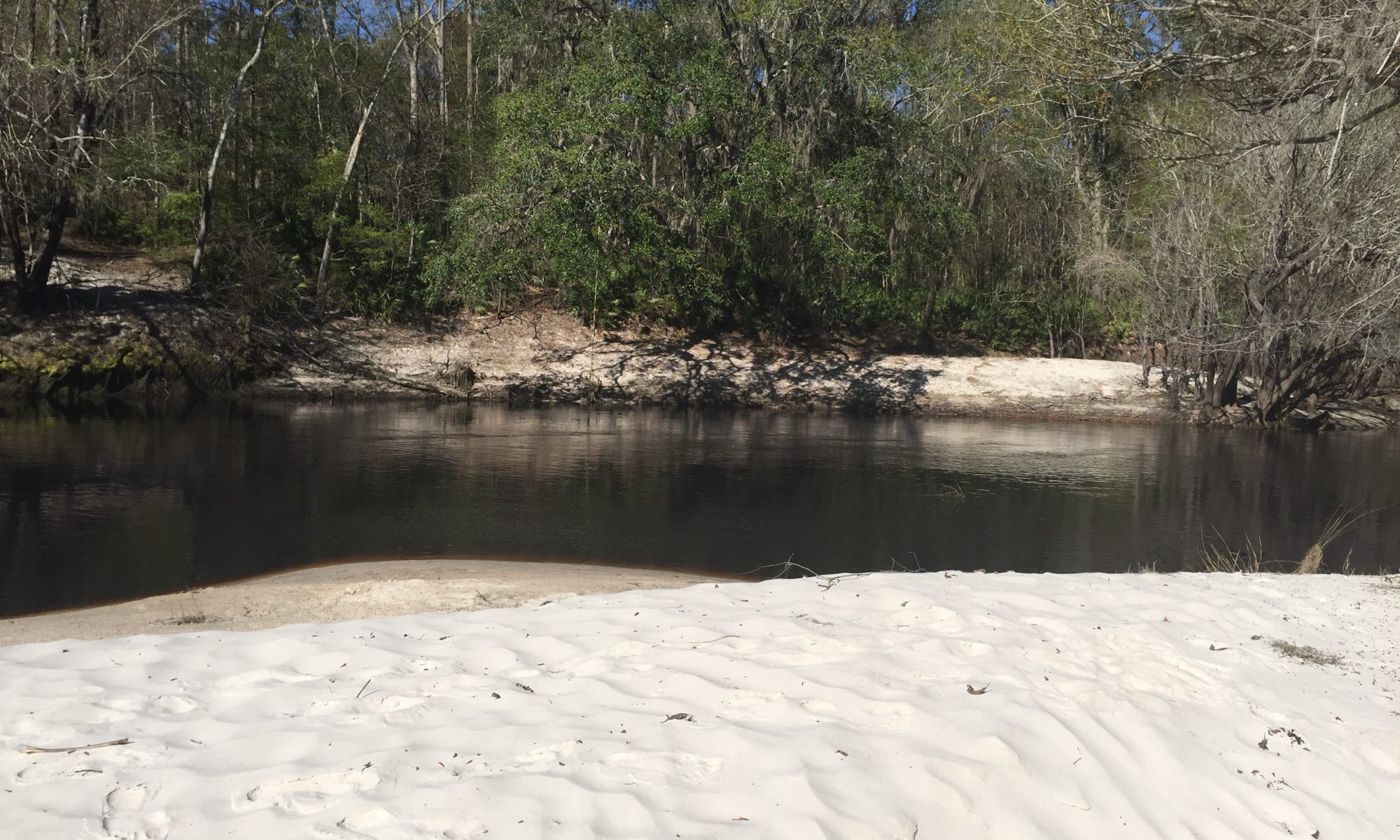
Stephen Foster never saw the Suwannee River, which may be the strangest part of this entire story. But for those of us who grew up around the Suwannee, it is a very real place. It is black water beneath limestone bluffs, springs spilling into the river, cypress knees along the banks, sandbars, shoals, ferries, and bridges. But for much of the country, the Suwannee became famous first as a line in a song.
In 1851, Stephen Foster wrote Old Folks at Home, the song many people would come to know simply as “Swanee River.” Foster was living far from Florida, and there is no evidence that he ever visited the river he made famous. The choice of the Suwannee was not the result of some memorable trip south or a personal attachment to this part of Florida. He was looking for a river name that worked in the song, and somehow he landed on the Suwannee. Even the spelling changed. Foster wrote it as “Swanee,” turning a real North Florida river into something that fit the rhythm of his music.
The song became enormously popular. By 1854, more than 130,000 copies had been sold, which was a remarkable number for the period. It spread through sheet music, performances, and eventually recordings, carrying the name of a river most Americans had never seen into homes far beyond Florida.
The Suwannee had existed for thousands of years before Stephen Foster wrote about it, but after 1851 it was no longer just a river. It had become an idea. People who had never visited North Florida knew the name Suwannee. Over time, the river became associated with longing for home, distance, memory, and the South itself. “Way down upon the Swanee River” became familiar even to people who could not have found the Suwannee on a map.
Eventually, Florida claimed the song as its own. In 1935, Old Folks at Home became the official state song, and White Springs eventually became the place where Florida chose to remember its composer.
That part of the story came much later. In 1931, Josiah K. Lilly proposed creating a memorial to Stephen Foster because his song had made the Suwannee River known around the world. The idea eventually led to the Stephen Foster Memorial at White Springs, which opened in 1950 and later became what we know today as Stephen Foster Folk Culture Center State Park.
There is something wonderfully strange about that sequence. A man in Pennsylvania writes a song about a river he never visits. The song becomes famous. The river becomes famous because of the song. Nearly a century later, a town along that river builds a memorial to the man who wrote it.
Growing up here, I never thought much about any of that. The Suwannee was simply the Suwannee. It was somewhere we swam, fished, paddled, crossed, and drove beside. It was part of the landscape rather than something that had first entered the imagination of much of the country through a song.
And yet the song has always been there too. To this day, I sing it almost every time I cross the Suwannee. It does not seem to matter which bridge takes me across. Somewhere between one bank and the other, “Way down upon the Swanee River” usually makes an appearance.
I have probably done that hundreds of times without giving much thought to how strange it really is. A song written in 1851 by a man who never saw this river somehow became part of my own ritual for crossing it.
Only later did I realize that millions of people knew the Suwannee in exactly the opposite order. They knew the song first. For them, the Suwannee may have existed as a lyric long before it became a place. For me, the river came first, and the song simply followed me across it.
That may be what I find most interesting about this story. Names have a strange way of carrying places farther than geography ever could. Stephen Foster never saw the Suwannee River, but the song he wrote in 1851 helped make sure much of the world knew its name. Eventually, the river returned the favor by giving Foster a permanent home on its banks.
Experience It
Stephen Foster Folk Culture Center State Park sits beside the Suwannee River in White Springs, a short drive from Anasa. Walk through the park, listen for the carillon from the tower, visit the museum if it is open, and then make your way down toward the Suwannee itself.
It is worth remembering that the river in front of you is the same one Foster chose from hundreds of miles away without ever seeing it.
If you are staying at Anasa, White Springs makes an easy half-day outing and pairs naturally with the Telford Hotel, the old spring house, and some time beside the river.
After spending the last few Field Notes exploring White Springs, there is still one question I want to come back to someday: Why did this little town become the place where Florida decided to remember Stephen Foster?
— Dion, Anasa founder